Praise for Structure & Surprise

12 02 2013

balbo

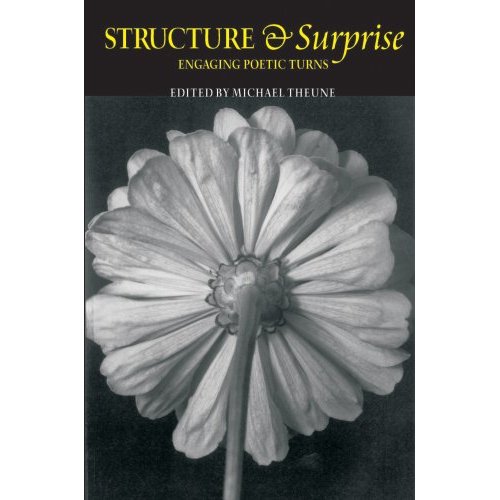
Over at Iambic Admonit, there is a terrific interview with poet Ned Balbo.  Among the smart, insightful comments Balbo makes, he includes this generous appraisal of Structure & Surprise:

“This might be the time to mention the critical anthology Structure & Surprise: Engaging Poetic Turns, edited by Michael Theune, which examines poetic structure through turns of thought or unfolding ideas rather than through rhythm or meter. Particularly incisive are essays by D. A. Powell (‘The Elegy’s Structures’) and Jerry Harp (‘The Mid-Course Turn’). It’s a great place to start moving beyond the tired ‘meter vs. free verse’ controversies.”

This is incredibly kind, and, if I may, perceptive.  One of the aims of Structure & Surprise is to emphasize a way of talking about what poems are and do that cuts across poetic types and aesthetics.  In “Notes on the New Formalism” (reprinted in Can Poetry Matter? (1992)), Dana Gioia observes,

“I suspect that ten years from now the real debate among poets and concerned critics will not be about poetic form in the narrow technical sense of metrical versus nonmetrical verse.  That is already a tired argument, and only the uninformed or biased can fail to recognize that genuine poetry can be created in both modes.  How obvious it should be that no technique precludes poetic achievement, just as none automatically assures it (though admittedly some techniques may be more difficult to use at certain moments in history).  Soon, I believe, the central debate will focus on form in the wider, more elusive sense of poetic structure.  How does a poet best shape words, images, and ideas into meaning?  How much compression is needed to transform versified lines–be they metrical or free–into genuine poetry?  The important arguments will not be about technique in isolation but about the fundamental aesthetic assumptions of writing and judging poetry.”

Structure & Surprise tries to move this debate–or, perhaps, ongoing discussion–along. Thanks to Ned Balbo for sensing / seeing this connection.  Check out one of Mr. Balbo’s own excellent poems (a sonnet, so expect turns!) here.


Voltage Poetry in the News

31 01 2013

OLYMPUS DIGITAL CAMERA


A nice write-up of the Voltage Poetry site, which features poems with great turns in it–along with discussion of those turns–can be found here.


Love Letter to the Volta

26 01 2013

All Turned Around


Dear Volta,

In the past few years,

you’ve become a huge

part of my life.  I think about you

almost constantly these days,

and that absolutely terrifies me.  For a

while after we met, I thought

you were trying to avoid me.  I felt

like I was constantly searching

for you and had no idea

where to even begin.

Then I started to learn your ways,

and we grew close.

Maybe a little too close.

You started to show up

everywhere, even when I wasn’t

looking for you.  Now it seems like

I can’t get away from you

anymore, and I think I really just

need some space.

It’s not that you’re not great,

I just don’t think I can

keep playing your games.

I feel like you’re just

spinning me in circles and

I’m not sure what you

want me to think.  You invite

your friends over unannounced

when I think it’s just going

to be the two of us settling in

for a cozy night by the fire.  You’ve just

become too unpredictable –

I never know what

you’re going to look like

the next time I see you,

and sometimes you just don’t

make any sense at all.

I’m trying my best to understand

you, but it’s like you just

keep sending me in different directions,

and I can’t take it anymore.

The thing is,

despite all that,

I still need.

I want you.

As much as I complain,

I still look for you constantly –

every time I open a book or go on

a computer, you’re there,

as patient with me as ever.

And when I don’t see you,

everything just seems so

predictable and boring.  Every time

I think I just need to get away

from you for a while,

you show me

a brand new way of looking at things

and I remember why

you fascinate me.

You’ve always been there

when I needed you, and you

constantly give me

new things to look forward to.

Finding you

changed the way I see the world,

and I can’t imagine my life

without you anymore.

And, if I’m being honest,

I can’t get enough of your but.

Don’t ever change.

Love, Emily


–by Emily Susina


*


Emily Susina is a senior at Illinois Wesleyan University, majoring in English (with a concentration in writing) and Greek and Roman Studies.  She serves an assistant with Voltage Poetry, the online anthology of poems with great turns, and discussion of those poems, co-edited by Kim Addonizio and me.  Clearly, the work is getting to her…!


Raising the Net

21 12 2012

srprpic

It’s been my great pleasure over the past few years to be associated with Spoon River Poetry Review–as a reader, and now as the review editor.  Spoon River for a long time has been a strong journal, but under the leadership of Kirstin Zona it’s becoming something really special, featuring some truly amazing poems–check out Arielle Greenberg Bywater’s “The Wicker Man,” or Austin Smith’s “Aerial Photograph, Glasser Farm, 1972”–by amazing poets–among the recents: Josh Corey and Linda Gregerson–and some great thinking about contemporary poetry and poetics: each issue, Spoon River features an extended review-essay that tackles an issue in contemporary poetry and considers three to five books of poems in light of that issue–reviewer/essayists include the likes of Andrew Osborn and Joyelle McSweeney.  You can read excerpts of these review-essays here.

I also contributed a review-essay a few issues back.  “Raising the Net” is a review-essay that uses Christina Pugh’s ideas about “sonnet thought” to consider the fate of the turn in some contemporary books of sonnets, including The Reality Street Book of Sonnets (a glorious mixed bag), Iteration Nets (in terms of turns: there are none), Nick Demske (interesting, if problematic), andSeverance Songs (pretty great).

I state in “Raising the Net” that “I revise Robert Frost’s idea that writing free verse is like ‘playing tennis with the net down.’  Writing formal sonnets, it turns out, is not too difficult; it’s the writing of sonnets without great turns that’s akin to a netless game.  In contrast, crafting sonnets with an eye toward their turns as well as a critical approach that can account for them not only raises the net but also raises the bar on what we expect from sonnets.”

The above is just a teaser to get you to read the whole introduction, which can be found here.  And this, of course, is a teaser to get you to explore and enjoy the recently-launched Spoon River Poetry Review website, itself an enticement to get you to subscribe to the journal.  And you should: it’s fantastic.


Paul Fussell on the “Indispensable” Volta

16 08 2012

I recently added to this blog’s “Turned onto Turns: Comments on Structure” page the following:

A characteristic of the Petrarchan sonnet is its convention of the “turn,” which normally occurs at the start of line 9, the beginning of the sestet.  It is perhaps more accurate to say that the turn occurs somewhere in the white space that separates line 8 from line 9, and that line 9 simply reflects or records it.  But wherever we think of it as actually taking place, something very important, something indeed indispensable to the action of the Petrarchan sonnet, happens at the turn: we are presented there with a logical or emotional shift by which the speaker enables himself to take a new or altered or enlarged view of his subject.

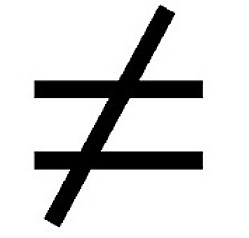
The standard way of constructing a Petrarchan sonnet is to project the subject in the first quatrain; to develop or complicate it in the second; then to execute, at the beginning of the sestet, the turn which will open up for solution the problem advanced by the octave, or which will ease the load of idea or emotion borne by the octave, or which will release the pressure accumulated in the octave.  The octave and the sestet conduct actions which are analogous to the actions of inhaling and exhaling, or of contraction and release in the muscular system.  The one builds up the pressure, the other releases it; and the turn is the dramatic and climactic center of the poem, the place where the intellectual or emotional method of release first becomes clear and possible.  From line 9 it is usually plain sailing down to the end of the sestet and the resolution of the experience.  If the two parts of the sonnet, although quantitatively unequal, can be said to resemble the two sides of an equation, then the turn is something like an equals sign: it sets into action the relationship between two things, and triggers a total statement.  We may even suggest that one of the emotional archetypes of the Petrarchan sonnet structure is the pattern of sexual pressure and release.  Surely no sonnet succeeds as a sonnet that does not execute at the turn something analogous to the general kinds of “release” with which the reader’s muscles and nervous system are familiar.

–Paul Fussell, Poetic Meter and Poetic Form, revised edition (New York: McGraw-Hill, Inc., 1979), pp. 115-116.

I love, of course, that Fussell notes that there is “something indeed indispensable” about the volta in the Petrarchan sonnet, that “[s]urely no sonnet succeeds as a sonnet that does not execute at the turn something analogous to the general kinds of ‘release’ with which the reader’s muscles and nervous system are familiar.  In making such claims, Fussell joins other commentators on the sonnet, including Phillis LevinEdward Hirsch and Eavan Boland, and Christina Pugh, who acknowledge the volta’s vital significance.

However, besides its clarity about the value of volta, what I also like about Fussell’s take on the volta is its inability to name exactly what a volta is like, or what exactly it does.  In the space of two paragraphs, Fussell states that a volta is like breathing, an equal sign, and sex–three things that are not much like each other…  Wonderful!  What I like about this multiplicity of analogies is that it correctly identifies the fact that different voltas can, and do, perform very different kinds of duties…  Great stuff!

And, of course, this does not apply only to sonnets–it also applies to many other kinds of poems.  As Ellen Bryant Voigt points out: “The sonnet’s volta, or ‘turn’…has become an inherent expectation for most short lyric poems.”


Voltappreciation

3 06 2012

“So what makes a good turn in a poem?  Me, I like it powerful.  That shock of…’oh, they can’t say that, can they?’  I want an epiphany, something that changes my view of the world, or adds to my understanding.  I want it to step up and out of the current context, to an overview of the whole world.  (Drilling down to the tiniest particular can work, too).  Wasn’t it Godel’s Theorem that states no system can be completely explained within itself, that is, cannot be fully self-contained?  So we have to leap out of a poem to get a clear view of it, as well.”

–P. M. F. Johnson

Insightful consideration of some strong turns in a recent issue of The New Republic can be found here.  Check it out!


King of the One-Liners: Bill Matthews and the Volta

31 05 2012

by Bradley Paul


My students love Bill Matthews’ “One Liner” poems, especially these:


Sleep

border with no country


Why I Didn’t Notice It

The moss on the milk is white


Lust Acts

But desire is a kind of leisure


or especially


Premature Ejaculation

I’m sorry this poem’s already finished


Why do they like them? “They’re witty,” “they’re smart” — interestingly, two adjectives that were commonly employed to describe Matthews himself —and, “I don’t know, there’s, like, a sort of twist at the end.”

A “twist?” Like in a movie, where the cop turns out to be the killer? No, nothing that silly. Like in a joke? well yeah, that’s closer, but not exactly a joke, because they’re still “poem-like” or “poem-y” or “poem-ish.” But in some of the poems there’s a punchline-like feel.

But how can there be a punchline in a one-line poem? Punchlines respond ironically to some antecedent in the joke: it’s funny that the secretary put Wite-Out on her computer screen because we know she’s blonde. It’s funny that there are skidmarks in front of the dead dog but not in front of the dead man, because we know the man is a lawyer.

Which brings us to a basic truth about these poems: they are not one-line poems. They’re two-line poems, because the title interacts in a specific and ironic way with the subsequent line of poetry to create the poem’s meaning and its effect, whether humorous or languorous or “poetic.” The titles do more than provide a context of setting or tell us what inspired the poem or sum up the sentiment, and they are not at all arbitrary or replaceable. They are an active part of the mechanism by which the poems operate.

And that mechanism is the volta.

Most poetry readers know the concept of the volta from studying the sonnet. The volta typically occurs between the octave and the sestet, though in some of Shakespeare’s sonnets it occurs as late as the thirteenth line, and it represents a fundamental “turn of thought”: my love isn’t so pretty, but at least she’s still precious to me. Life is sad, but when I think of you, I’m happy. It’s appropriate that the volta in many sonnets is typically signified by words like but, yet, still, then. The loudest volta one might hear is in the recording of John Berryman reading from the Dream Songs (which — don’t be fooled — are 18-line sonnets) on Halloween, 1963 at the Guggenheim. When, in Dream Song #29, he gets to the line “But never did Henry…” he pauses, then literally SCREAMS the word “but,” then pauses again, as the turn of thought, coming at a point when Henry tries to rationalize the feelings of guilt he’s just described, echoes over what we imagine is a stunned and perhaps frightened New York audience.

But the volta doesn’t always have to announce itself, and it doesn’t have to be in a sonnet. As a matter of fact, it is one of the fundamental units of poetic thought, and most of the poems where it occurs aren’t sonnets. But we typically don’t recognize the volta as such because we are trained to associate it with the change in a sonnet’s rhyme scheme or to identify it by a blatant transition like “but.” If we divorce ourselves from a formulaic definition of the term, though, and look at it just in terms of what it itself does (it “turns” as, the etymology of the word tells us, a dancer turns) and if we allow a certain amount of subtlety in the poems we read, it becomes apparent that the volta is present and necessary in a wide variety of poetry.

It is the volta that students are responding to when they say a one-liner is like a joke, but not a joke because it is “poem-like.” I believe that what they see as “poem-like” is the fact that the result of the “twist” isn’t irony, as in a joke, but emotional revelation. One could say that each one-liner is itself essentially a volta on display: say one thing, then a twist that makes it interesting. But the volta is also the source of much of what we think of as Matthew’s emotional smartness in all of his poems, his ability, after speaking casually about some topic, to suddenly end with a line that “hits home.” Matthews’ last lines typically make a sudden turn away from intellectual wordplay to clearly express a striking emotional fact. For example, at the end of “Search Party,” when, after a lot of poetic musing, we discover the basic fact that the missing child is alive, and Matthews tells us to “Admit you’re glad.” Or at the end of “Black Box,” when what has seemed like chatter about planes cruising and crashing is subverted by the doomed pilots’ simple and incontrovertible realization: “‘We’re going down.’ ‘I know.'” To read a Mattthews poem is to think one is cruising through a pleasant and witty chat and then, just as you think your host is handing you your coat, to instead get punched in the face.

It’s no surprise that Matthews was such a fan of Martial, whose epigrams rely on puns or stabs in the last line to create their humor or poignancy. I frequently show students Matthews’ translations of Martial after we’ve looked at the one-liners, then have them write their own one-liners and epigrams. Recognizing and using this little twist, this little turn, starts off as a fun exercise, but quickly gets serious, especially as students begin to write longer, more serious poems. Taking the one-liners as a starting point, they see that in their lives, as in Matthews’ poems and the poems of many great poets, there are two kinds of speaking: the articulate, stylized speech of the brain and the simple, shattering facts of the heart. And just a small dance step leads you from one to the other.

* * *

Bradley Paul was born in Baltimore, Maryland in 1972. His poetry has appeared in American Poetry ReviewBoston Review,Smartish Pace, FencePleiadesIowa Review, and numerous other journals. In 2004 his first book of poetry, The Obvious, was selected by Brenda Hillman for the New Issues Poetry Prize. His second book, The Animals All Are Gathering, won AWP’S Donald Hall Prize in Poetry, and was published in 2010 by the University of Pittsburgh Press.

Paul taught a variety of film, literature and writing classes at the Maryland Institute College of Art and Towson University before relocating to the West Coast. He has also directed, written, line produced, and edited several short and feature films and commercials. A graduate of the University of Tennessee at Chattanooga and the University of Iowa Writers’ Workshop, he currently lives in Los Angeles with his wife, the painter and writer Karri Paul.

To check out Paul’s website, click here.

This essay first appeared in Poetry International, 2005 (issue 9).  Reprinted by permission.

* * *

For more on surprising turns in short (one- to two-lined) poems, click here.

For more on the volta, click here, and here, and here.  Aw, heck: explore this whole blog–where we aim to give the volta its star turn!


Turn, Turn, Turn

10 03 2012

The turn stars in three of my recent print publications.  Here they are…

“Raising the Net” appears in Spoon River Poetry Review 36.2 (Summer/Fall 2011).  “Raising the Net” is a review-essay that uses Christina Pugh’s ideas about “sonnet thought” to consider the fate of the turn in some contemporary books of sonnets, including The Reality Street Book of Sonnets (a glorious mixed bag), Iteration Nets (in terms of turns: there are none), Nick Demske (interesting, and problematic), and Severance Songs (pretty great).

I state in “Raising the Net” that “I revise Robert Frost’s idea that writing free verse is like ‘playing tennis with the net down.’  Writing formal sonnets, it turns out, is not too difficult; it’s the writing of sonnets without great turns that’s akin to a netless game.  In contrast, crafting sonnets with an eye toward their turns as well as a critical approach that can account for them not only raises the net but also raises the bar on what we expect from sonnets.”

The Shadow of Sirius: A Critical Conversation” appears in Until Everything Is Continuous Again: American Poets on the Recent Work of W. S. Merwin, edited by Jonathan Weinert and Kevin Prufer (Seattle, WA: WordFarm, 2012).  “The Shadow of Sirius: A Critical Conversation” is an essay I co-authored with poet-critic Mark Halliday in which Mark and I debate the merit of Merwin’s latest book of poems–Mark: generally against; me, strongly for.

As I prepared to write my portion of the essay, it became clear to me that Merwin was a great poet of the surprising turn.  Though, of course, I make my case for this claim more fully in the published essay, a preview of my argument can be found here.

“Other Arrangements: The Vital Turn in Poetry Writing Pedagogy” appears in Beyond the Workshop.  “Other Arrangements” is, in large part, a friendly amendment to Tom C. Hunley’s excellent Teaching Poetry Writing: A Five-Canon Approach.  In his book, Hunley argues 1) that we need to get beyond the workshop as a core pedagogical method for teaching poetry writing, and 2) that one way to do this is to orient teaching toward the five canons of rhetoric: invention, arrangement, style, memory, and delivery.

I contribute to Hunley’s argument by arguing that strong consideration of the turn should be a key part of the discussion of the second canon, arrangement.  I wrote a little on this here, though, again, the published essay is much more complete.

It feels good to get more thought about the vital turn out into the world.  My thanks to my insightful and generous editors–Kirstin Hotelling Zona, Jonathan Weinert, Kevin Prufer, and Paul Perry–for allowing me the opportunity share my ideas, and for helping to make my writing and thinking on behalf of these ideas as strong as possible.


Add Excitation to Your Recitation: Attend to the Turn

27 08 2011

W.W. Norton & Company is organizing The Norton Anthology Recitation Contest.  This contest is open to college and high school students worldwide.  Additional information, including rules, can be found here.

Recitation is a demanding–but also very rewarding–art.  At poets.org, John Hollander’s “Committed to Memory” offers some helpful insights into and advice about recitation.

Here, I’d like to offer a simple but also powerful bit of advice to anyone preparing to recite a poem: attend to the poem’s turn.

A turn is a major shift in a poem’s rhetorical and/or dramatic trajectory.   Most poems–certainly most great poems–have turns.  And almost all of the recitation contest’s eight authorized poems have turns in them.  Any skilled recitation needs to communicate the power of the turn.

Writing about the volta–that is, the turn in a sonnet–Phillis Levin states, “[t]he reader’s experience of this turn (like a key change) reconfigures the experience of all the lines that both precede and follow it.”  Thus, when reciting a poem, the performer must know where the turn is–or, turns are–and must be aware of, and communicate, the nature of the turn’s key change: what is the argument and tone of the poem prior to the turn?  how does the argument and tone shift after the turn?

To assist potential performers with this aspect of their recitation, I offer a few notes on the turns in some of the authorized contest poems.  Links to some of the contest’s authorized poems are below.  Each link is followed by a brief discussion of the poem which locates and describes each poem’s major turn(s). 

A few details:

While there certainly are numerous minor–yet still significant–turns in each of the following poems, I will only discuss the major turns, offering what I hope will be a helpful orientation to the poem and introduction to some of the poem’s demands on the performer.

Additionally, I suggest that if you plan to participate in the contest, you should use the versions of these poems found in the Norton anthologies listed on the contest webpage–the Norton judges may be very particular about what edition of a poem is recited.

Sonnet 12 (“When I do count the clock that tells the time”), by William Shakespeare

This poem has two major turns: one at the end of line 8, and one at the end of line 13.  (Notice that there is no major turn at the end of line 12, where one might expect one in a Shakespearean sonnet.  For information on the mobile volta, click here.)

The first turn turns from an account of the omnipresence of aging and death to then consider the beauty of the person to whom the sonnet is addressed, which also will be subject to aging and decay.  The turn here goes from serious to even more serious, from general considerations of mortality to the mortality of the sonnet’s addressee.

The second turn turns from an impossible situation–the truth of the addressee’s mortality–to offer some hope: breed (this word requires a lot of emphasis), that is, have children so that you may brave death when it comes to take you away.

“Death be not proud,” by John Donne

The major turn of Donne’s sonnet occurs right before the sonnet starts.  One needs to imagine Donne’s speaker hearing someone (such as the speaker of Shakespeare’s sonnet, above) talk about how all-powerful death is, making claims the speaker recounts in lines 1 and 2: “some have called thee / Mighty and dreadful…”  

A kind of cliche-and-critique poem, Donne’s whole poem is a turn from thinking death is powerful to offer an alternative vision.  And it needs to be read this way, with emphasis on the words that stress the speaker’s alternative viewpoint.  Take, for example, the first two lines–they need to be read with the following rhetorical stresses:

“Death, be not proud, though some have called thee / [“]Mighty[“] and [“]dreadful[“], for thou art not so…”

(One can imagine scare quotes around “Mighty” and “dreadful”…)

So, the major turn occurs before the poem even starts, but there are some vital, minor turns in the poem.  The speaker turns at the end of line 4 from his almost mocking introduction to offer a picture of how peaceful death–which is no worse than rest or sleep–must actually be.  This new, softer kind of mockery of death ends at the end of line 8.  Lines 9-10 become heavy again, a direct attack on death.  And then comes, again, that softer approach to critiquing death in the next line-and-a-half.  The rest of the poem is explanatory, showing the reasons death should not “swell’st,” that is, get all puffed up with pride, and it is (for the poem’s speaker) glory: death is just sleep until the resurrection.

A great question for anyone thinking about reciting this poem is how to perform its final four words, “Death, thou shalt die.”  Certainly, as the end of the poem is making clear a paradox, “thou” must get a good deal of rhetorical stress, as in, “Surprise, Death: YOU are the one who will die.”  But what’s the voice here?  Is it heavy, growling, antagonistic?  Or is it already victorious, and, so, matter-of-fact?  Try it many ways, and see what works for you.

“Here Follows Some Verses upon the Burning of Our House, July 10th, 1666,” Anne Bradstreet

Bradstreet’s poem has three major turns: one in the midst of line 13, another at the end of line 20, and another at the end of line 36.

The first part of this poem is filled with distress and despair, fright and sadness, mixed with pleas for God’s assistance.  One must imagine a long pause at the end of line 12: the speaker has just realized that her whole house has been destoyed by fire.  But, in line 13, a virtual miracle is in the making: the speaker collects herself and realizes that, even in the midst of such (seeming) loss, she is participating in the playing out of the will of God, of the way things should be.  Again, one needs to pay attention to the rhetorical stresses in this section, especially those needed to make clear the speaker’s new realizations: that all that she had thought she had owned actually all along was God’s.

The next major shift occurs at the end of line 20.  There’s a temporal shift–the poem has moved beyond the night of the fire.  And there’s also an emotional shift: the confidence the speaker felt in the Lord’s will slips when she looks sadly upon the ashes of her house and remembers what life had been like in the house. 

But then, in the pit of despair–having acknowledged that it seems to her that “all’s vanity”–the speaker moves again to acceptance, and even to praise.  This final section–perhaps up until the final two lines, which might be read as summation–should largely be read as an ever-growing crescendo; the speaker, after all, is delivering a sermon, sharing a vision.

“How do I love thee,” by Elizabeth Barrett Browning

The major turn in this poem occurs in the middle of line 13.

While any performer will have to work out how to modulate the voice while performing this list, it’s clear that there’s some crescendo from the middle of line 12 to the middle of line 13.  This crescendo suddenly stops, and the speaker, in the space between the words “life!” and “and” (one imagines there must be a significant pause here), realizes that death could end her love, and so prays quietly that God (whom she seemed earlier to have given up on) allow her and her beloved to live on after death.

* * *

Enjoy exploring these poems!  And, if you decide to participate: best wishes in the recitation contest!


The Poetic Turn: The Seat of the Soul of the Sonnet

24 07 2011

In her introduction to The Penguin Book of the Sonnet: 500 Years of a Classic Tradition in English, Phillis Levin discusses eloquently the power of the volta, or the turn, in the sonnet.  Levin states:

“…the arrangement of lines into patterns of sound serves a function we could call architectural, for these various acoustical partitions accentuate the element that gives the sonnet its unique force and character: the volta, the ‘turn’ that introduces into the poem a possibility for transformation, like a moment of grace.

“The volta, the sonnet’s turn, promotes innovative approaches because whatever has occurred thus far, a poet is compelled, by inhabiting the form, to make a sudden leap at a particular point, to move into another part of the terrain.  Reading sonnets, one constantly confronts the infinite variety of moves a poet can make to negotiate a ‘turn.’  Though a poet will sometimes seem to ignore the volta, its absence can take on meaning, as well–that is, if the poem already feels like a sonnet.  We could say that for the sonnet, the volta is the seat of its soul.  And the reader’s experience of this turn (like a key change) reconfigures the experience of all the lines that both precede and follow it.  The volta foregrounds the paradigm, making us particularly conscious of the rhyme scheme; likewise, the poet’s anticipation guides every move he or she will make.  The moment a pebble is dropped into a pond, evidence of that action resonates outward, and at the same time continues to draw the eye back to the point from which all succeeding motions ensue.”

Along with three other experts on the sonnet–Heather Dubrow, Paul Muldoon, and Susan Wolfson–Levin discusses the above idea, and many other ideas about the sonnet, in a panel called “The Art of the Sonnet.”  A video of the panel discussion can be found here:

And it seems as though video poet Tapas de Luna had some fun with this panel, taking her own turn with the presentation, having some riotous fun…  Enjoy!