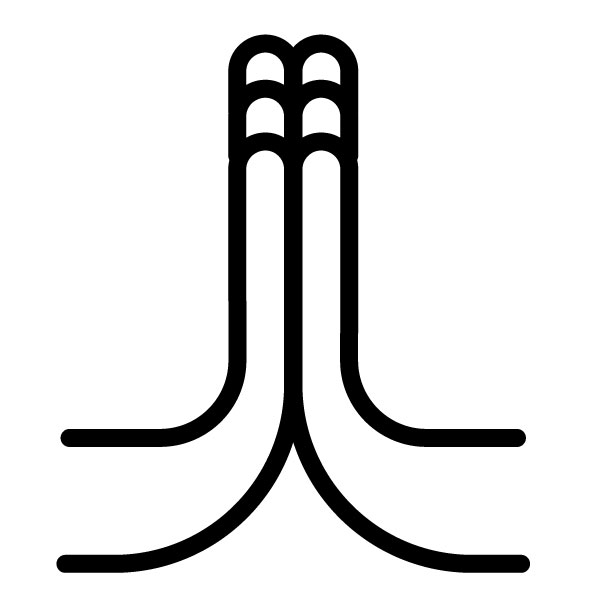
“The Snail,” a new emblem poem

3 01 2013


snailemblem


–by Aaron Crippen

*

Aaron Crippen is a poet and educator.  He is the translator of Nameless Flowers: Selected Poems of Gu Cheng (George Braziller, 2005), a project for which he received an NEA Literature Fellowship, and for which he received a PEN Texas Literary Award for Poetry.  His poems have appeared in numerous journals, including Verse and the Beloit Poetry Journal.

For more on emblem poems, click here.


Raising the Net

21 12 2012

srprpic

It’s been my great pleasure over the past few years to be associated with Spoon River Poetry Review–as a reader, and now as the review editor.  Spoon River for a long time has been a strong journal, but under the leadership of Kirstin Zona it’s becoming something really special, featuring some truly amazing poems–check out Arielle Greenberg Bywater’s “The Wicker Man,” or Austin Smith’s “Aerial Photograph, Glasser Farm, 1972”–by amazing poets–among the recents: Josh Corey and Linda Gregerson–and some great thinking about contemporary poetry and poetics: each issue, Spoon River features an extended review-essay that tackles an issue in contemporary poetry and considers three to five books of poems in light of that issue–reviewer/essayists include the likes of Andrew Osborn and Joyelle McSweeney.  You can read excerpts of these review-essays here.

I also contributed a review-essay a few issues back.  “Raising the Net” is a review-essay that uses Christina Pugh’s ideas about “sonnet thought” to consider the fate of the turn in some contemporary books of sonnets, including The Reality Street Book of Sonnets (a glorious mixed bag), Iteration Nets (in terms of turns: there are none), Nick Demske (interesting, if problematic), andSeverance Songs (pretty great).

I state in “Raising the Net” that “I revise Robert Frost’s idea that writing free verse is like ‘playing tennis with the net down.’  Writing formal sonnets, it turns out, is not too difficult; it’s the writing of sonnets without great turns that’s akin to a netless game.  In contrast, crafting sonnets with an eye toward their turns as well as a critical approach that can account for them not only raises the net but also raises the bar on what we expect from sonnets.”

The above is just a teaser to get you to read the whole introduction, which can be found here.  And this, of course, is a teaser to get you to explore and enjoy the recently-launched Spoon River Poetry Review website, itself an enticement to get you to subscribe to the journal.  And you should: it’s fantastic.


Paul Fussell on the “Indispensable” Volta

16 08 2012

I recently added to this blog’s “Turned onto Turns: Comments on Structure” page the following:

A characteristic of the Petrarchan sonnet is its convention of the “turn,” which normally occurs at the start of line 9, the beginning of the sestet.  It is perhaps more accurate to say that the turn occurs somewhere in the white space that separates line 8 from line 9, and that line 9 simply reflects or records it.  But wherever we think of it as actually taking place, something very important, something indeed indispensable to the action of the Petrarchan sonnet, happens at the turn: we are presented there with a logical or emotional shift by which the speaker enables himself to take a new or altered or enlarged view of his subject.

The standard way of constructing a Petrarchan sonnet is to project the subject in the first quatrain; to develop or complicate it in the second; then to execute, at the beginning of the sestet, the turn which will open up for solution the problem advanced by the octave, or which will ease the load of idea or emotion borne by the octave, or which will release the pressure accumulated in the octave.  The octave and the sestet conduct actions which are analogous to the actions of inhaling and exhaling, or of contraction and release in the muscular system.  The one builds up the pressure, the other releases it; and the turn is the dramatic and climactic center of the poem, the place where the intellectual or emotional method of release first becomes clear and possible.  From line 9 it is usually plain sailing down to the end of the sestet and the resolution of the experience.  If the two parts of the sonnet, although quantitatively unequal, can be said to resemble the two sides of an equation, then the turn is something like an equals sign: it sets into action the relationship between two things, and triggers a total statement.  We may even suggest that one of the emotional archetypes of the Petrarchan sonnet structure is the pattern of sexual pressure and release.  Surely no sonnet succeeds as a sonnet that does not execute at the turn something analogous to the general kinds of “release” with which the reader’s muscles and nervous system are familiar.

–Paul Fussell, Poetic Meter and Poetic Form, revised edition (New York: McGraw-Hill, Inc., 1979), pp. 115-116.

I love, of course, that Fussell notes that there is “something indeed indispensable” about the volta in the Petrarchan sonnet, that “[s]urely no sonnet succeeds as a sonnet that does not execute at the turn something analogous to the general kinds of ‘release’ with which the reader’s muscles and nervous system are familiar.  In making such claims, Fussell joins other commentators on the sonnet, including Phillis LevinEdward Hirsch and Eavan Boland, and Christina Pugh, who acknowledge the volta’s vital significance.

However, besides its clarity about the value of volta, what I also like about Fussell’s take on the volta is its inability to name exactly what a volta is like, or what exactly it does.  In the space of two paragraphs, Fussell states that a volta is like breathing, an equal sign, and sex–three things that are not much like each other…  Wonderful!  What I like about this multiplicity of analogies is that it correctly identifies the fact that different voltas can, and do, perform very different kinds of duties…  Great stuff!

And, of course, this does not apply only to sonnets–it also applies to many other kinds of poems.  As Ellen Bryant Voigt points out: “The sonnet’s volta, or ‘turn’…has become an inherent expectation for most short lyric poems.”


Attending to the Turn

7 08 2012

Kind words about Structure & Surprise here.

I’m especially thrilled that Joanna Preston senses that the turn can open up new possibilities for poets–there’s no higher praise, in my book.

My thanks to Ms. Preston for her post.  Preston herself is a terrific poet–check out the turns in her poems “Half a World” and “A Murder of Crows.”


Voltappreciation

3 06 2012

“So what makes a good turn in a poem?  Me, I like it powerful.  That shock of…’oh, they can’t say that, can they?’  I want an epiphany, something that changes my view of the world, or adds to my understanding.  I want it to step up and out of the current context, to an overview of the whole world.  (Drilling down to the tiniest particular can work, too).  Wasn’t it Godel’s Theorem that states no system can be completely explained within itself, that is, cannot be fully self-contained?  So we have to leap out of a poem to get a clear view of it, as well.”

–P. M. F. Johnson

Insightful consideration of some strong turns in a recent issue of The New Republic can be found here.  Check it out!


King of the One-Liners: Bill Matthews and the Volta

31 05 2012

by Bradley Paul


My students love Bill Matthews’ “One Liner” poems, especially these:


Sleep

border with no country


Why I Didn’t Notice It

The moss on the milk is white


Lust Acts

But desire is a kind of leisure


or especially


Premature Ejaculation

I’m sorry this poem’s already finished


Why do they like them? “They’re witty,” “they’re smart” — interestingly, two adjectives that were commonly employed to describe Matthews himself —and, “I don’t know, there’s, like, a sort of twist at the end.”

A “twist?” Like in a movie, where the cop turns out to be the killer? No, nothing that silly. Like in a joke? well yeah, that’s closer, but not exactly a joke, because they’re still “poem-like” or “poem-y” or “poem-ish.” But in some of the poems there’s a punchline-like feel.

But how can there be a punchline in a one-line poem? Punchlines respond ironically to some antecedent in the joke: it’s funny that the secretary put Wite-Out on her computer screen because we know she’s blonde. It’s funny that there are skidmarks in front of the dead dog but not in front of the dead man, because we know the man is a lawyer.

Which brings us to a basic truth about these poems: they are not one-line poems. They’re two-line poems, because the title interacts in a specific and ironic way with the subsequent line of poetry to create the poem’s meaning and its effect, whether humorous or languorous or “poetic.” The titles do more than provide a context of setting or tell us what inspired the poem or sum up the sentiment, and they are not at all arbitrary or replaceable. They are an active part of the mechanism by which the poems operate.

And that mechanism is the volta.

Most poetry readers know the concept of the volta from studying the sonnet. The volta typically occurs between the octave and the sestet, though in some of Shakespeare’s sonnets it occurs as late as the thirteenth line, and it represents a fundamental “turn of thought”: my love isn’t so pretty, but at least she’s still precious to me. Life is sad, but when I think of you, I’m happy. It’s appropriate that the volta in many sonnets is typically signified by words like but, yet, still, then. The loudest volta one might hear is in the recording of John Berryman reading from the Dream Songs (which — don’t be fooled — are 18-line sonnets) on Halloween, 1963 at the Guggenheim. When, in Dream Song #29, he gets to the line “But never did Henry…” he pauses, then literally SCREAMS the word “but,” then pauses again, as the turn of thought, coming at a point when Henry tries to rationalize the feelings of guilt he’s just described, echoes over what we imagine is a stunned and perhaps frightened New York audience.

But the volta doesn’t always have to announce itself, and it doesn’t have to be in a sonnet. As a matter of fact, it is one of the fundamental units of poetic thought, and most of the poems where it occurs aren’t sonnets. But we typically don’t recognize the volta as such because we are trained to associate it with the change in a sonnet’s rhyme scheme or to identify it by a blatant transition like “but.” If we divorce ourselves from a formulaic definition of the term, though, and look at it just in terms of what it itself does (it “turns” as, the etymology of the word tells us, a dancer turns) and if we allow a certain amount of subtlety in the poems we read, it becomes apparent that the volta is present and necessary in a wide variety of poetry.

It is the volta that students are responding to when they say a one-liner is like a joke, but not a joke because it is “poem-like.” I believe that what they see as “poem-like” is the fact that the result of the “twist” isn’t irony, as in a joke, but emotional revelation. One could say that each one-liner is itself essentially a volta on display: say one thing, then a twist that makes it interesting. But the volta is also the source of much of what we think of as Matthew’s emotional smartness in all of his poems, his ability, after speaking casually about some topic, to suddenly end with a line that “hits home.” Matthews’ last lines typically make a sudden turn away from intellectual wordplay to clearly express a striking emotional fact. For example, at the end of “Search Party,” when, after a lot of poetic musing, we discover the basic fact that the missing child is alive, and Matthews tells us to “Admit you’re glad.” Or at the end of “Black Box,” when what has seemed like chatter about planes cruising and crashing is subverted by the doomed pilots’ simple and incontrovertible realization: “‘We’re going down.’ ‘I know.'” To read a Mattthews poem is to think one is cruising through a pleasant and witty chat and then, just as you think your host is handing you your coat, to instead get punched in the face.

It’s no surprise that Matthews was such a fan of Martial, whose epigrams rely on puns or stabs in the last line to create their humor or poignancy. I frequently show students Matthews’ translations of Martial after we’ve looked at the one-liners, then have them write their own one-liners and epigrams. Recognizing and using this little twist, this little turn, starts off as a fun exercise, but quickly gets serious, especially as students begin to write longer, more serious poems. Taking the one-liners as a starting point, they see that in their lives, as in Matthews’ poems and the poems of many great poets, there are two kinds of speaking: the articulate, stylized speech of the brain and the simple, shattering facts of the heart. And just a small dance step leads you from one to the other.

* * *

Bradley Paul was born in Baltimore, Maryland in 1972. His poetry has appeared in American Poetry ReviewBoston Review,Smartish Pace, FencePleiadesIowa Review, and numerous other journals. In 2004 his first book of poetry, The Obvious, was selected by Brenda Hillman for the New Issues Poetry Prize. His second book, The Animals All Are Gathering, won AWP’S Donald Hall Prize in Poetry, and was published in 2010 by the University of Pittsburgh Press.

Paul taught a variety of film, literature and writing classes at the Maryland Institute College of Art and Towson University before relocating to the West Coast. He has also directed, written, line produced, and edited several short and feature films and commercials. A graduate of the University of Tennessee at Chattanooga and the University of Iowa Writers’ Workshop, he currently lives in Los Angeles with his wife, the painter and writer Karri Paul.

To check out Paul’s website, click here.

This essay first appeared in Poetry International, 2005 (issue 9).  Reprinted by permission.

* * *

For more on surprising turns in short (one- to two-lined) poems, click here.

For more on the volta, click here, and here, and here.  Aw, heck: explore this whole blog–where we aim to give the volta its star turn!


Writing a Metaphor-to-Meaning Poem

8 05 2012

Though in my intro to poetry writing class I typically do not focus on the turn until the second half of the semester (there is so much to cover prior to this: creative process, artistic recklessness, the poetic leap, the many means to create surprise, etc), I recently have taken to providing students with an exercise focused on the turn in the first day of class.

After performing the rituals of the beginning of the semester (taking roll, handing out and discussing the syllabus, etc), I introduce my students to the metaphor-to-meaning structure.  We examine a couple of key examples (often Whitman’s clear “A noiseless, patient spider” and Rod Smith’s wild “Ted’s Head”)—I describe the metaphor-to-meaning structure, and I ask students to locate and explain the turn, which they can, and do.  We then examine a handful of metaphor-to-meaning poems in which the turn reveals that the metaphor was meant to stand for or say something about poetry, or the poem, or that poet.  Baudelaire’s “The Albatross” and Zbigniew Herbert’s “The Hen” work very well for this.  We take some time, explore and appreciate these poems, and then I give my students their assignment: write a poem like these—write a poem that opens with a metaphor and closes by revealing that the metaphor (somehow) relates to poetry, poems, or the figure of the poet.  The main bit of advice I give my students is to try to come up with a description of something very different from poetry to serve as the metaphor—much of the fun of reading a metaphor-to-meaning poem about poetry is the surprise that comes with finding out that, in fact, it is in some way about poetry.

This, of course, seems like a lot to give students, especially on the first day.  However, perhaps because it’s the beginning of the semester and everyone is excited to get underway, and/or because students want to begin to describe their orientation to poetry, and/or because, in fact, I keep this a low-stakes assignment (due the next class meeting, in which it is read but not workshopped—if students want to workshop it, they can later in the semester), and/or because no one has yet given such demanding assignments, my students typically have taken this assignment and run with it, and they’ve made some very nice poems as a result.

Here are two student poems that ended up fitting the metaphor-to-meaning structure perfectly.  Yet, even though these poems closely engage the structure, they do so in very different ways.  With the metaphoric status of the blister(-as-poem) remaining a mystery until the end, Anjelica Rodriguez’s “Blister” makes a beautiful kind of surprising sense.  However, the turn in Stephen Whitfield’s “Maturity” is more sudden, more shocking—it resonates with what Rachel Zucker calls the epiphanic structure.


Blister

by Anjelica Rodriguez


You think only of the pain,

When there is only healing.


And now you know how it feels

To write a poem.


***


Maturity

by Stephen Whitfield


Shining vaguely under the water,

She is like the ghost I claimed to see in the attic

Swimming in circles she will never understand


She cannot sit still

She cannot close her eyes

She is looking for something anonymous and vital


Something absurd and perfect

It catches her eye and she ascends like a raptured priest

Gasping, fighting an inconceivable pull


She is alive again only when released

Already semi-desperate to fight it again


I miss the urgency of my first poems.


***

Some students used the metaphor-to-meaning structure as more of a launching pad.  They ended up creating strong poems, but poems that, in the end, are not actually metaphor-to-meaning poems.  Brittany Gonio’s “My Kind of Poetry” ended up as more of a cliché-and-critique poem.  And I’m frankly not sure what to call Colleen O’Connor’s “Where We Sleep.”  While it clearly is in dialogue with the metaphor-to-meaning structure, it is not, strictly speaking, a metaphor-to-meaning poem.  But, of course, in the end this does not matter—what matters is that it, like the other poems gathered here, is a thrilling, engaging poem.


My Kind of Poetry

by Brittany Gonio


My kind of poetry

is not an ornate object

on display in an upper class suburban home.

It is not the family jewels

hidden away in a safety deposit box,

for which the children

have only a false appreciation.

My poetry will never cradle me

like goose feathered bedspreads

and waterbed mattresses,

nor will it be the pillow talk

my lover whispers to me

(whether his intention be from his heart

or his groin).

It is not a hospital recovery room

with extended visiting hours

and the promise of being

“just like brand new”

in a couple of days.


My poetry is a boxing match

where I never have to look

to the jumbotron to channel

the intensity in my chaotically

coordinated opponent.

Every punch that grazes only air

depletes my resolve and loses support

of my knees.

Every jab met with hard muscle

sends a surge of endorphins

through my knuckles and veins.

I flit through the entirety

of the human spectrum of emotion

in the rounds between bell chimes,

and leave the ring

swallowing tears,

grinning through migraines.


My poetry breaks me

repeatedly,

and I,

like a teenage lover,

consistently return to it,

because I am married to it

in a way that has nothing to do

with religion

or income laws,

but in that

“bigger than yourself”

tidal wave revelation.

My poetry has made me

an adrenaline junkie;

I dread building up tolerance,

fear calluses that will hinder sharp stings,

loathe the body’s natural instinct

to protect itself.

For I yearn to sustain

and possess

the awe of aftershocks

each morning as

my fingers glide over

word-shaped bruises,

and chart muscles and flesh

I didn’t know

could feel.


***


Where We Sleep

by Colleen O’Connor


In the field behind his childhood home,

He buried two dogs,

A baby bird,

A stray cat,

The fish he wouldn’t flush,

A few chewed up toys,

And the rabbit

He never got to name.


It’s been thirty years.

In a different house,

A different dog skitters on the wood floors.

It growls at the rumbling washing machine,

Sleeps between him and the woman

Who reminds him of his mother.


He comes back to the field sometimes,

When the woman is at work and the dog has been fed

And the new backyard feels too small.


In the silence, the prairie grass mumbles,

Shifts in the wind,

Soft as the belly of a sleeping bear.


In the desk beside his end table,

He buried his poems.


He pulls them out sometimes, years later,

Once the woman is asleep and the dogs have been dead for years

And the bed feels too big.


In the silence, she mumbles,

Shifts in her sleep,

A shape in the shadows.


Under the light of his end table,

He flips the pages,

Unearths six girls,

One man,

A year in Amsterdam,

A tour with the coast guard,

Four bouts of depression,

And the daughter

He never got to name.


He holds the poems gently,

Like baby birds.


Tiny coffins, they are strangely light

For how much they hold.


***

If you like the poems you see here, I hope you’ll give this assignment a try.

For a variant of this assignment, see “Extended Metaphor as Ars Poetica” in Tom C. Hunley’s The Poetry Gymnasium: 94 Proven Exercises to Shape Your Best Verse (30-33).  In this assignment, Hunley suggests simply creating an extended metaphor (using anything that’s not poetry) and then calling the poem “Poetry” or “Ars Poetica.”  A kind of meaning-to-metaphor poem, which can have great result, as well.

***

My thanks to Anjelica, Stephen, Brittany, and Colleen for granting me permission to use their poems.


Surprised by Syntax: Stanley Fish on the Sentence’s Turns

21 04 2012

I recently read and enjoyed Stanley Fish’s How To Write a Sentence: And How To Read One.  At one level, Fish’s book is chock-full of lovely language, and the loving investigation of such language, and so it will appeal to anyone who, as Keats defined himself, is a “lover of fine phrases.”  On another level, Fish’s book appeals to this particular reader because, in some interesting ways, it parallels Structure & Surprise: Engaging Poetic Turns.

How To Write a Sentence is a kind of Structure & Surprise of the sentence.  Although the linguistic effect Fish is most taken by is enactment—when the structure of a sentence behaves in a way similar to what the words in the sentence attempt to describe—Fish also loves the turn.  For Fish, an admirable sentence often is one that turns, and, in fact, often incorporates both structure and surprise.  When discussing a sentence he admires, Fish often points out the sentence’s “fulcrum (9), ” “hinge” (58), or “turn” (67; 143).  Fish also is interested in the powerful use of structure in amazing sentences.  He notes of a sentence from Milton’s An Apology Against a Pamphlet that “[t]he basic structure of the sentence is ‘although…yet’” (57).  A sentence from Martin Luther King Jr.’s Letter from a Birmingham Jail is, though Fish does not label it so, a magisterial list-with-a-twist (see pp. 52-3).

Fish’s interest in turns becomes palpable in chapter 7, “The Satiric Style: The Return of Content.”  According to Fish, he decided to focus on satire, “one kind of content,” “arbitrarily” (89).  While that may be the case, it also is the case that this selection allows Fish to highlight turns.  Turns abound in this chapter, which features sentences that are, in the words Fish uses to describe one particular sentence, “snappy and whiplike” (91).  Twice, Fish refers to the “turn” in sentences by Oscar Wilde, even noting in one instance that “[t]he trick in writing sentences like these is to open with a deadpan observation that gives no clue to the nasty turn the performance will soon take” (93).

More broadly, Fish admires sentences that play with expectation.  Commenting on a sentence by Jonathan Swift—“Last week I saw a woman flayed, and you will hardly believe how much it altered her person for the worse” (95)—Fish states, “The form Swift deploys is fairly simple.  Put together two mildly affirmed assertions, the second of which reacts to the first in a way that is absurdly inadequate…” (96).

In his chapter on “First Sentences,” Fish investigates the dynamics of first sentences, finding in them “an angle of lean,” that is, the manner in which “they lean forward, inclining in the direction of the elaborations they anticipate” (99).  Many of these sentences, especially those that open novels and short stories, involve the subversion of expectation.  Discussing the opening line of Philip Roth’s Goodbye, Columbus—“The first time I saw Brenda she asked me to hold her glasses”—Fish states:

“The economy of this is marvelous.  ‘The first time I saw’ is a narrative cliché; it is often followed by something romantic, like ‘The first time I saw her my breath was taken away’ or ‘The first time I saw her I couldn’t stop staring.’  (Working against expectations is something skilled writers often do; it gives them two for one, the assertion they deliver and the one a reader may have been anticipating.)” (102-3)

And Fish compares the opening line of Leonard Michaels’s “Honeymoon”—“One summer, at a honeymoon resort in the Catskill mountains, I saw a young woman named Sheila Kahn fall in love with her waiter”—to a joke, referring to its “setup” and “punch line” (103).

While, of course, I do not mean to imply any causal connection between my work and Fish’s, I do mean to point out that our work overlaps, and, I believe, that our projects corroborate and support each other.  And, in fact, that How To Write a Sentence is a kind of Structure & Surprise of the micro-levels of writing is confirmed when Fish discusses the relation between writing and form.  While he wants, and, in fact, his book focuses on, attention to form, Fish is wary of an empty formalism.  Fish states, “The conclusion to be drawn…is not that focusing on forms is irrelevant to the act of composing, but that the focus one finds in the grammar books is on the wrong forms, on forms detached from the underlying (or overarching) form that must be in place before any technical terms can be meaningful and alive” (15).  (This mirrors the critique of certain uses of form that Randall Jarrell makes in “Levels and Opposites: Structure in Poetry,” and that I use to open my essay “Poetic Structure and Poetic Form: A Necessary Differentiation.”)  And, further on, Fish links the kinds of form in which he is interested with “rhetorical structures,” the kinds of structure discussed in Structure & Surprise and on this blog.  Fish states,

“Let me say again that by ‘forms’ I do not mean parts of speech or any other bit of abstract machinery.  I mean structures of logic and rhetoric within which and by means of which meanings—lots of them—can be generated.  The logical structures are the ones we have already met: the structure of relationships between actor, actions, and the objects acted upon.  The rhetorical structures are structures of arguments (that is what argument is, the art of argument); they too are formal—abstract, countless—but rather than being the forms that make random words into propositions (sentences), they are forms that link propositions together in more complex units.  Relationships are also central to their operation, but they are relationships among statements, not the relationships that must be in place if there are to be statements at all.” (29)

Interestingly, in his next paragraph Fish mentions Gerald Graff and Cathy Birkenstein’s They Say/I Say, a book I like very much, and a book that I refer to (at one remove: I refer to Graff’s Clueless in Academe, the more theoretical book that clearly gave rise to They Say/I Say) in my essay “The Quarrelsome Poem,” which defines and discusses the cliché-and-critique structure.

The parallels between Fish’s work in How To Write a Sentence and Structure & Surprise are so clear that I would encourage those intrigued by Fish’s book to explore this blog, especially some of the comments on the surprises that can be found in fiction (available here, and here), which fleshes out Fish’s notion of “an angle of lean” by suggesting that a surprising first line enacts the kind of surprise one is bound to discover in high-quality fiction, and the writing on the turn in haiku and in two-line poems, two poetic forms that often are accomplished in the space of a single sentence, and two forms that, like so many forms, rely greatly on the structural turn.

* * *

Though I thought of it on my own, alas, I am not the first one to use the phrase “surprised by syntax”—a play on the title of Fish’s important study of Paradise Lost, called Surprised by Sin.  The credit for that goes to Horace Jeffery Hodges, over at the Gypsy Scholar blog.  Well-played, Horace Jeffery Hodges—well-played.


Nicholas Royle’s Veering

12 04 2012

“Nowhere is this haphazard and disruptive strangeness of veering perhaps more evident than in the space of literature.  Indeed…in a sense this is what literature is.”  –Nicholas Royle

For those interested in the poetic turn as it is discussed on this blog, Nicholas Royle’s Veering: A Theory of Literature is, for the most part, a real treat: it offers the theoretical surround that helps to show why we need to further highlight the turn in poetry.

Royle’s theory is complex and multi-faceted, and I don’t intend to give a full reading of it here–rather, I want to discuss it a bit generally, and then reflect on its intersections with the thinking about the poetic turn.

According to Royle, his book is “a twisted love story” and “a theory of literature,” but “[m]ostly it is about the love for one word: ‘veering’.”  Royle notes, and then explains: “This word does not occur with enormous frequency, either in literature or in everyday language, but that is perhaps part of its charm.  In the pages that follow I explore ‘veering’ as a sort of pivot for thinking about literature and its relation to the world.”

As one might gather from the above, Royle, who also refers to veering as “a sort of creative and critical, literary and theoretical figure in motion, a dream-shifter,” means many, many things by veering.  At one level, veering is an existential truth; it offers an new orientation to what we are as humans, and to the place that humans possess in the world.  Royle states:

“Veering involves an economy of desire.  Everybody veers in his or her own fashion.  But this is never simply a matter of choice, volition or ‘personal preferences’.   There is always something other about veering.  Veering offers fresh slants on the classical notion of clinamen (‘leaning’, ‘inclination’) as a basis for thinking about the strangeness of life, the singularity of being in the world, as well as about that peculiar thing we call literature.

“Veering is not human, or not only human.  Other animals veer.  So do objects, such as stars.  The theory of veering is non-anthropocentric.  It gets away from the supposition that we human animals are at the centre of ‘our’ environment.  As we will see, the word ‘environment’ has veering–the French verb, virer, ‘to turn’–inscribed within it.  Veering orients us towards a new understanding of ‘the environment’.”

Veering also is a theoretical construct.  Veering offers new ways to read literature:

“Veering is kinetic and dynamic.  At once literal and figurative, it offers a mobile arsenal of images and ideas for thinking differently about literature–about genre, plot and narration, character and point of view, voice, tone and music, authorial attention and desire.  It opens up new possibilities for responding to what is on the move and uncertain in the very moment of reading, to what is slippery, unpredictable and chancy in the experience of literature.”

Much of Veering–including the chapters “Reading a Novel,” “Reading a Poem,” “Veerer: Where Ghosts Live,” “Veerer: Reading Melville’s ‘Bartlebey,'” and “Veering with Lawrence”–is taken up with showing the kinds of insights and perspective one gains from thinking about literature through the clarifying/distorting lens of veering.  Of particular interest is Royle’s development of the concept of the “veerer,” a concept, as Royle himself admits, one “cannot pin down.”  “Veerer,” however, seems to be the name for any instantiation of slipperiness or shiftingness in the text: “Veerer might also be a name for that experience in which you find yourself coming into another track…A veerer…may involve a feeling of uncanny surprise.”  To at least approximate a definition of the slippery veerer, Royle offers fifteen aphorisms to suggest possible meanings/uses of the term; among them:

“1. A veerer is someone or something that veers or makes veer.  You cannot pin down a veerer any more than you can categorize the place of a supplement or finalize the relationship between literature and the secret.”

“4. No aphorism without a veerer.

“12. ‘Veerer’ is at once micrological and macrological.  It might refer, for example, to a movement to be picked up in a single word or piece of a word, or indeed a single item of punctuation or spacing, as well as to an entire text.

“15. The greatest literary works, the most haunting and compelling but also the most resistant to reading, are the most veering.  A masterpiece is always a veerer.”

Veerers can be many things, and vice versa.  Poetic turns, as they are defined in Structure & Surprise and on this blog (as a shift in the rhetorical and/or dramatic trajectory of a poem), certainly are veerers.  Royle often recognizes the relationship between veering and turning:

–“‘Veering’ involves contemplating all sorts of turns, funny and otherwise.”

–“To engage with the verb ‘to veer’ is to find ourselves in Latin, French and other so-called foreign waters.  We are already adrift.  We must turn and turn about.  Besides ‘veer’ itself and other words linked to the French virer, for example, there are all the words related to the Latin verb vertere (‘to turn’)…Then there are the inexhaustible riches of the word ‘turn’ (from the Latin tornare, ‘to turn in a lathe’, from tornus, ‘turner’s wheel’, from Greek tornos, ‘lathe’)…”

–In his brief chapter on drama (“Drama: An Aside”), Royle notes that “[w]hile there’s no veering, in a literal sense, in Shakespeare’s writings…Shakespeare is…the greatest turner in the English language,” and he recognizes that in Shakespeare’s oeuvre “there are hundreds of instances of ‘turn’.”

–“‘A story, to be a story, must have a turning-point’, [Elizabeth Bowen] declares.”

What Royle says about veering also often can be applied to turns; and points that have been made about the turn can be applied to veering:

The turn often creates surprise, as does veering.  Royle states, “Veering can be deliberate or unintentional.  Either way, there is a suggestion of something sudden, unexpected, or unpredictable….Veering, then, entails an experience of untapped and unpredictable energy.”

Considering the turn makes us think about the power and the intrigue of poems in new ways, as does veering.  Royle states, “Veering offers a new and different way of construing the nature of plot and storytelling: changes in subject, narrator, time and location; alterations in characterization, or in a character’s perception, knowledge, belief or feelings; deviation, digression or twisting at the level of the individual sentence, syntax or word.”

Jokes turn from set-up to punch line.  And Royle also recognizes the role of the veer for creating humor: “No humour without veering.”  Aphorisms work in ways similar to jokes, and, was we already know: “No aphorism without a veerer.”

So, turning is a kind of veering, and many of the insights Royle offers about veering can be applied to turning.  I want to turn now offer a few insights into how some of the work done on the turn can help to supplement some of the ideas in Veering.

Those interested in animals veering, and how such veering has influenced / plays itself out in literature, really should read Peter Sacks’s “You Only Guide Me by Surprise”: Poetry and the Dolphin’s Turn.  Sacks reads the presence of dolphins in poetry as totemic, signalling an important turn / veer.  (More detailed information may be found here.)

Royle assigns the veer an important role in evaluating literature, stating, “Veering impels us towards new questions about aesthetics.  A literary text is composed of forces.  It is a work of veering.  The literary work may veer well or beautifully, in a shift or turn that pleases, surprises, thrills, fascinates.  Or it can veer poorly, ineffectually, clumsily.  The ‘twist in the tale’, for example, is hardly ever a veering worthy of the name.”  And the role of the turn in evaluating poetry has been something that I’ve explored on this blog and elsewhere.  Here are a few links:

“Fitting Surprise and the Critique of Recent Poetics.”

“Writing Degree [infinite sign].”  Uses the surprising turn to evaluate contemporary haiku.

“Raising the Net.”  Uses the volta, the sonnet’s turn, to evaluate recent collections of sonnets.  In this essay, I state, “I revise Robert Frost’s idea that writing free verse is like ‘playing tennis with the net down.’  Writing formal sonnets, it turns out, is not too difficult; it’s the writing of sonnets without great turns that’s akin to a netless game.  In contrast, crafting sonnets with an eye toward their turns as well as a critical approach that can account for them not only raises the net but also raises the bar on what we expect from sonnets.”

–Additionally, a panel at the 2012 AWP conference investigated the qualities of excellent turns in short stories.  Read Erin Stalcup’s panel presentation here.
Veering and the poetic turn clearly are related.  However, in one of, for me, the very few disappointments of Veering, Royle does little to make the connection clear.  In fact, when he discusses poetry, Royle tends to avoid discussion of the turn, or else he mentions it to quickly bypass it.  For example, in “Reading a Poem,” Royle discusses diataxis, which he, following Francois Roustang, defines as “the stylistic figure of interpretation that tips discourse over, turns it back, or makes it advance.”  And diataxis clearly is related to the turn; Royle states, “Diataxis is pivotal…for thinking about narrative and dramatic turns–not only the major reversals and returns that characterize the plays of Sophocles or Ibsen and literary narratives from fairy tales to Philip Roth…”  As this sentence’s construction indicates, diataxis as rhetorical turn is about to be overtaken:  “…but also the micrological deviations, digressions or divergences that occur mid-sentence.”  And, when Royle discusses how diataxis can be used to read a poem, he essentially skips the turn; Royle states,

“Above and beyond those characteristics we have just noted…, diataxis in poetry would entail (1) a special attentiveness to the surprising or interruptive play of the letter, the twists and turns a word might take or make, the disjunctive or deviant effects of homonyms or homophones, the strangely mobilized energies of etymology, and so on and sew forth; and (2) everything that is at play in the word ‘verse’ as such, the force of turning that is the very veering of a line, diataxis in and across line-endings.”

At the end of his book, Royle even equates “more specifically poetic veerings” with “the turning of a line or sentence, the turning of a word within itself and between its various appearances.”  The larger-scale poetic turn effectively has disappeared from Royle’s account of poetic veering.

Far from being unique to Royle, this kind of bypassing of the poetic turn, or the elision of the poetic turn into the consideration of verse’s line breaks, is familiar.  It’s the kind of elision one also finds in Jeremy Tambling’s RE:Verse–Turning towards Poetry.  (For my investigation into the way in which Tambling shifts a discussion of the poetic turn to a discussion of verse’s line breaks, click here.)  But just because this kind of elision is familiar does not mean it’s good.

Still, of course, the tasks (not to mention the audiences) of theory often differ from those of poetry criticism and pedagogy.  In Veering, Royle focuses on what he needs to focus on.  And in so doing, Royle develops a fascinating new way to consider all manner of literature and experience, a fascinating new way that, in some very big ways, jibes with the overall project of Structure & Surprise, including this blog.  I hope you’ll check it out.


Turn, Turn, Turn

10 03 2012

The turn stars in three of my recent print publications.  Here they are…

“Raising the Net” appears in Spoon River Poetry Review 36.2 (Summer/Fall 2011).  “Raising the Net” is a review-essay that uses Christina Pugh’s ideas about “sonnet thought” to consider the fate of the turn in some contemporary books of sonnets, including The Reality Street Book of Sonnets (a glorious mixed bag), Iteration Nets (in terms of turns: there are none), Nick Demske (interesting, and problematic), and Severance Songs (pretty great).

I state in “Raising the Net” that “I revise Robert Frost’s idea that writing free verse is like ‘playing tennis with the net down.’  Writing formal sonnets, it turns out, is not too difficult; it’s the writing of sonnets without great turns that’s akin to a netless game.  In contrast, crafting sonnets with an eye toward their turns as well as a critical approach that can account for them not only raises the net but also raises the bar on what we expect from sonnets.”

The Shadow of Sirius: A Critical Conversation” appears in Until Everything Is Continuous Again: American Poets on the Recent Work of W. S. Merwin, edited by Jonathan Weinert and Kevin Prufer (Seattle, WA: WordFarm, 2012).  “The Shadow of Sirius: A Critical Conversation” is an essay I co-authored with poet-critic Mark Halliday in which Mark and I debate the merit of Merwin’s latest book of poems–Mark: generally against; me, strongly for.

As I prepared to write my portion of the essay, it became clear to me that Merwin was a great poet of the surprising turn.  Though, of course, I make my case for this claim more fully in the published essay, a preview of my argument can be found here.

“Other Arrangements: The Vital Turn in Poetry Writing Pedagogy” appears in Beyond the Workshop.  “Other Arrangements” is, in large part, a friendly amendment to Tom C. Hunley’s excellent Teaching Poetry Writing: A Five-Canon Approach.  In his book, Hunley argues 1) that we need to get beyond the workshop as a core pedagogical method for teaching poetry writing, and 2) that one way to do this is to orient teaching toward the five canons of rhetoric: invention, arrangement, style, memory, and delivery.

I contribute to Hunley’s argument by arguing that strong consideration of the turn should be a key part of the discussion of the second canon, arrangement.  I wrote a little on this here, though, again, the published essay is much more complete.

It feels good to get more thought about the vital turn out into the world.  My thanks to my insightful and generous editors–Kirstin Hotelling Zona, Jonathan Weinert, Kevin Prufer, and Paul Perry–for allowing me the opportunity share my ideas, and for helping to make my writing and thinking on behalf of these ideas as strong as possible.