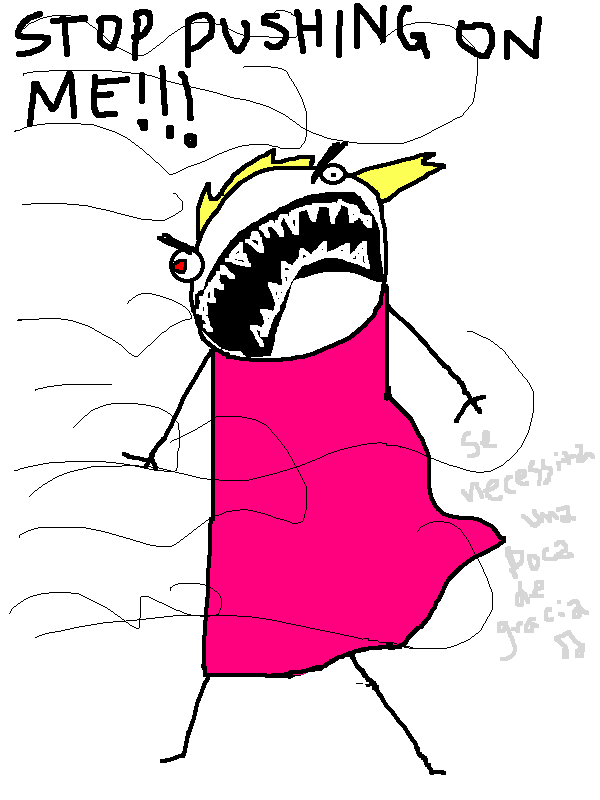
So I’m kind of groovin’ on a site that’s new to me: Punch-in-the-Face Poetry. This site posts some slammin’ good poems. Among the criteria that the site’s editor looks for in a great poem is “a strong turn.” And there certainly are turns-a-plenty at Punch-in-the-Face. So, check it out, and check out Voltage Poetry, and Voltage! And let those great turns do what they do so well: knock you out!
Punch-in-the-Face Poetry
9 04 2014Comments : Leave a Comment »
Tags: poetic turn, Punch-in-the-Face Poetry, volta, Voltage Poetry
Categories : poetic turn, volta, voltage
Two New Filibuster Poems
10 03 2014Two terrific new (at least to me…) filibuster poems:
“No Insect,” by Steve Westbrook, and
“This Morning I Could Do a Thousand Things,” by Robert Hedin.
Check ’em out!
Comments : 1 Comment »
Tags: filibuster poem, poetic turn, Robert Hedin, Steve Westbrook
Categories : filibuster poem, poetic turn
Voltage Poetry 2.0 Launches Tomorrow!
17 02 2014Tomorrow morning, at 11 a.m. (CST), the next round of contributions to Voltage Poetry launches! I hope you’ll check it out–
(Teaser: for the first post of the new launch, David Mason reflects on the stunning turn in Cally Conan-Davies’s “Wompoo Fruit Dove”…)
As noted on Voltage Poetry’s “About” page, in “Lyricism of the Swerve,” Hank Lazer asks, “Is there a describable lyricism of swerving? For those poems for which the swerve, the turn, the sudden change in direction are integral, can we begin to articulate a precise appreciation?” Voltage Poetry continues to strive to undertake this important articulation and appreciation.
Co-edited by Kim Addonizio and yours truly, Voltage Poetry is an online anthology that collects essays written by some of today’s most exciting poets and critics about poems with great turns them. Right now, the site features over 70 essays on some amazing poems. As with the first round of publication, each week approximately three new essays will be posted. As we currently have over 30 new contributors, the site’s conversation about the turn will continue to evolve for approximately the next three months or so. However, submissions also are accepted (interested? click here for information)–so the conversation may continue. In the months to come, I look forward to further reflecting on the turn here at the Structure & Surprise blog by examining ideas and questions raised in and by the essays on Voltage Poetry. I hope others also may be inspired by Voltage Poetry and begin to think and write more about the poetic turn.
Voltage Poetry has been a collaborative effort from the start, and it remains so. It has been a deep pleasure to get to work with Kim and all the site’s contributors–a group of truly amazing poets and critics. Additionally, many poets whose poems are featured on the site offered gracious assistance when it came to attaining permission to reprint their poems. And numerous permissions and publishing professionals continue to be generous and supportive of this project.
This round of publications in Voltage Poetry has benefited greatly from the dedicated work of its editorial assistant, Erica Kucharski. Student assistants Colleen O’Connor, Nicole Pierce, Maggie Zeisset, Kristina Dehlin, Mike Dickinson, and Danielle Kamp have helped with proofreading. Michael Gorman’s technical expertise has been invaluable. My heartfelt thanks to all involved with this stage of the project…
I hope you, too, will get involved with Voltage Poetry–if you do: thank you!
Comments : Leave a Comment »
Tags: Cally Conan-Davies, David Mason, poetic turn, volta, Voltage Poetry
Categories : poetic turn, Uncategorized, volta
Bob Bray’s “David Lee”
9 02 2014david lee
he was my friend
and then he wasn’t
he got wild
I went to college
he loved a girl named ann
she loved him back sort of
he played the saxophone
he had a band
tenor ramrods
ann went somewhere else
he got wilder
he broke a window
he stole a naked manikin
they put him in the asylum
he died there of something
and then he wasn’t
he was my friend
–Bob Bray
*
My colleague Bob Bray shared with me the above poem which he wrote in tribute to a high school friend, and I wanted to share it with the readers of this blog. I deeply admire this poem–its humanity and humility, and also its craft, its care. It is a gorgeous, understated elegy, an acknowledgement of both complexity and loss.
Comments : 2 Comments »
Tags: elegy, poetic turn, Robert Bray
Categories : Elegy, poetic turn, Uncategorized
Turning the Bad Poem into the Great
16 01 2014Over at The French Exit, Eliza Gabbert critiques Danielle Cadena Deulen’s “The Needle, the Thread,” a poem included in the most recent issue of Crazyhorse. Gabbert’s critique is multifaceted–from noting grammatical problems to registering that the poem “oozes sentimentality”–however, the heart of Gabbert’s critique, it seems to me, is the poem’s lack of a turn. Gabbert notes that the poem contains a “pretty flat register of emotion: awe all the way through.” And, as a result, “there’s no real tension.” What Gabbert would prefer is more drama; she states, “Give me a big Rilkean ending any day. But in a Rilke poem, you get 13 staid lines about a bust of Apollo before the flushed demand of the ending. There’s a sense of subtlety, a sense of balance.” Rilke’s “Archaic Torso of Apollo,” of course, is famous for presenting a particularly stunning act of turning, of, in the words of M. L. Rosenthal, poetic “torque.”
In her contribution to the “Endless Structures” section of Structure & Surprise, Rachel Zucker discusses “Archaic Torso of Apollo” as a kind of turn that she calls “the Epiphanic structure.” About poems using this kind of structure, this pattern of turns, Zucker states, “The pleasure in this kind of poem lies in the surprise (an ambush really) of the turn and the following resolution. The sudden utterance at the end of the poem, sounding very much like a non sequitur, collides with description like a driver running a red light. Whiplash, double-take, brief confusion ensues, but in this case, almost as soon as confusion registers, the rhetoric of the last line aggressively co-opts the description and defines the entire scene. What seemed at first a rogue bit of language is suddenly manifested as the essence of the poem. Dissonance gives way (rather quickly) to a feeling of rightness, of inevitability.”
Sure, some interesting poems don’t turn much at all–consider Ron Padgett’s “Nothing in That Drawer” or Peter Gizzi’s “Protest Song.” And, of course, it’s a tall order for any poem to approach the strange majesty, the authority, of Rilke’s poem. And there certainly are ways to value “The Needle, the Thread” outside of its relationship with the turn. However, it also generally is the case that most successful poems work the way that Randall Jarrell says they do–Jarrell states, “A successful poem starts from one position and ends at a very different one, often a contradictory or opposite one; yet there has been no break in the unity of the poem.” That is to say, they, as Gabbert notes in the comments section of her post, “surprise.”
*
Danielle Cadena Deulen’s “Corrida de Toros, it seems to me, is a Jarrellian “successful poem”–check it out here.
Comments : 6 Comments »
Tags: Danielle Cadena Deulen, Eliza Gabbert, Peter Gizzi, poetic turn, Rachel Zucker, Rainer Maria Rilke, Randall Jarrell, Ron Padgett
Categories : Epiphanic structure, poetic turn
Super, Smart!
15 11 2013FULL DISCLOSURE
The wise old
beginner—an applecheeked boy
practically—
born
laughing
into a huge white beard
is a sometime
friend and weird-
ly potent little
notion of mine
when-
ever I feel—that one
too many
lids are closing—
*
Since I don’t know how long, my friend and former student Dan Smart has been posting (at least!) a poem / day on Facebook. Just at the level of quantity, it’s an impressive project. What makes the project truly awesome, however, is the quality of the poems–so many sudden revelations and glorious surprises!
As with so many of Dan’s poems, “Full Disclosure” grabbed my attention. And, as it seemed to me to be a new emblem poem, I thought I’d post it here for fans of the turn.
Many thanks to Dan for granting permission to reprint the poem, and for sharing his daily discoveries over on Facebook.
Comments : Leave a Comment »
Tags: Dan Smart, Emblem Structure, poetic turn
Categories : Emblem Structure, poetic turn
There’s a Turn There, Too
13 11 2013Comments : Leave a Comment »
Tags: Allie Brosh, poetic turn
Categories : poetic turn
Peter Meinke’s “The Poet, Trying to Surprise God”
15 10 2013…is pretty freakin’ good. Check it out here.
Comments : Leave a Comment »
Tags: Peter Meinke, poetic turn, surprise
Categories : poetic turn, surprise